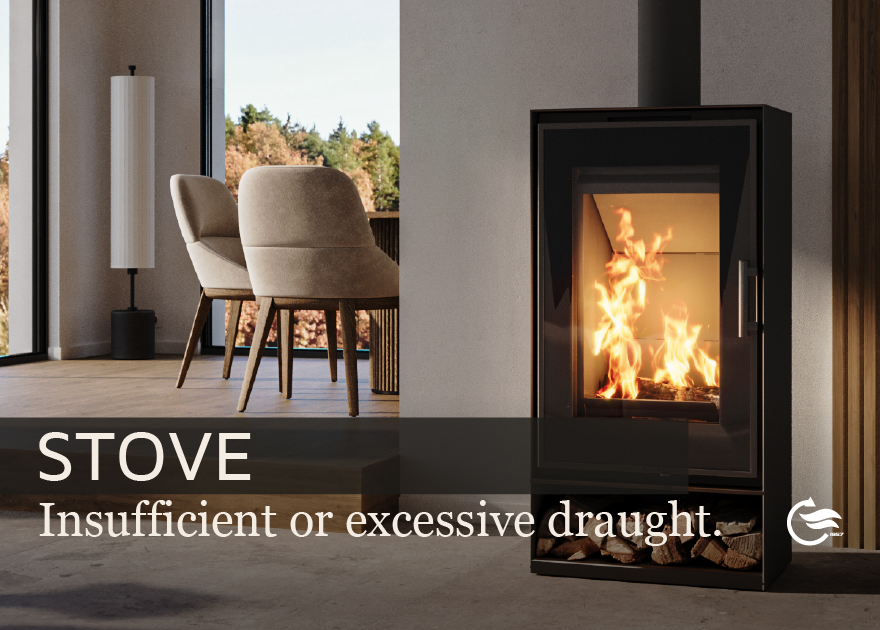
What problems can too little or too much chimney draught cause in a wood-burning stove?

What problems can too little or too much chimney draught cause in a wood-burning stove?

Chimney draught affects how air enters a stove and how combustion gases escape. If the draught is too weak, the fire may burn poorly and smoke may struggle to escape. If it is too strong, the wood may burn too quickly, making the fire harder to control.

A stove does not need as much draught as possible. It needs the level of draught specified for that particular model.

What is chimney draught in a wood-burning stove?

Chimney draught is the pressure difference that helps hot combustion gases rise through the flue. It occurs mainly because these gases are less dense than the outdoor air. The height, diameter, insulation and layout of the flue also affect draught.

What problems can insufficient draught cause?

Insufficient draught makes it harder for combustion gases to escape. Signs can include a weak, smoky fire that tends to go out. Smoke may also spill back into the room when the stove door is opened.

Another possible sign is glass that quickly becomes dirty. However, draught is not necessarily the only cause. Damp firewood, incorrect air settings or a dirty flue can produce similar symptoms.

Poor combustion can also encourage soot and creosote build-up. Inadequate airflow can also lead to dangerously high carbon monoxide levels. Smoke entering the home should never be considered normal.

Why might a stove have insufficient draught?

The cause may lie in the chimney, the property or even the weather.

A blocked, incorrectly sized or poorly routed flue can reduce draught.

Particular care is needed in very airtight homes. Under certain conditions, a kitchen extractor fan can create negative pressure. If there is not enough replacement air, this can lead to poor combustion or smoke spilling back into the room.

What happens when chimney draught is too strong?

Excessive draught does not necessarily make a wood-burning stove work better. A pressure difference greater than the manufacturer specifies can speed up combustion.

The wood may burn too quickly, making the fire more difficult to regulate.

How can you tell whether your stove has the correct draught?

These signs can help you spot a problem, but they cannot identify its cause on their own.

Draught should be checked against the values specified by the manufacturer for that particular appliance.

If smoke appears, the fire keeps going out or the wood burns too quickly, the entire installation should be checked. The flue, air supply, fuel, seals and maintenance can all play a part.

We recommend that these checks, and any alterations to the flue, are carried out by qualified professionals. The aim is not to achieve the strongest possible draught, but the right draught for each stove.

Sources consulted

CARBEL. Operating and Maintenance Instructions for S-60, S-70, S-80, RS-60, RS-70 and RS-80 (2026). Information on minimum draught, flue requirements, air supply and troubleshooting.

CARBEL. VISION Installation and Operating Guide. Technical information on minimum and maximum draught, air intake and flue sizing.

Government of Navarre – Fire Service. Guidance on draught, ventilation, carbon monoxide, creosote and chimney maintenance.

Schiedel. Technical documentation and troubleshooting guidance for wood-burning stoves, covering the relationship between insufficient or excessive draught and combustion performance.

Department for Communities, Northern Ireland. Technical documentation explaining the physical principles behind chimney draught.

How should you prepare a wood-burning stove before the first fire of the season?

How should you prepare a wood-burning stove before the first fire of the season?

Before lighting a wood-burning stove after the summer, check its general condition, clean the firebox and inspect the flue. Use dry firewood and make sure the flue is free from obstructions.

You should also keep the area around the stove clear and check for any visible signs of damage.

These simple checks can help identify potential problems before lighting the fire. They also contribute to more stable combustion and proper stove operation throughout the season.

What should you check before lighting a wood-burning stove?

The first inspection should always be carried out with the stove completely cold.

Check the inside of the firebox, the glass, the door and the seals. You should also inspect the refractory components for cracks, deformation or displaced parts.

Air inlets must be clean and free from obstructions. Air is necessary for combustion and for maintaining proper draught.

After a long period without using the stove, at CARBEL we particularly recommend checking the chimney flue. There should be no blockages that could prevent smoke and combustion gases from being evacuated correctly.

How should you clean the stove before using it again?

Cleaning is another important part of the checklist.

Remove any accumulated ash and clean the firebox according to the instructions for your specific model. If you clean the glass, always use suitable products and methods.

In our maintenance instructions, CARBEL recommends applying the cleaner to a cloth. Avoid spraying it directly onto other parts of the door. Unsuitable chemical products may damage paint, seals or metal components.

It is also advisable to check the condition of the flue and chimney cap.

Burning wood can produce creosote deposits on the inside of the flue. A significant build-up may eventually ignite.

What is the best firewood for the first fire of the season?

Fuel quality directly affects how a stove performs.

The main recommendation is simple: use properly seasoned firewood.

At CARBEL, we recommend firewood with a moisture content below 20%. IDAE also recommends a maximum moisture content of 20% for firewood used as biomass.

Wet wood provides less useful heat and makes combustion more difficult. It can also increase smoke and residue build-up.

To start the fire, use small pieces of dry wood. You can then add suitable logs according to the loading instructions for your stove.

Never use flammable liquids to light the fire. You should also never burn plastics, household waste or other unsuitable materials in the stove.

What safety checks should you carry out?

Before the first fire, check the area surrounding the appliance.

Keep furniture, fabrics and other combustible materials away from the stove. Poor evacuation of combustion gases can increase the risk of carbon monoxide accumulating indoors.

Always follow the safety distances and specific manufacturer instructions for your stove model.

Finally, during the first fire, observe the flame and the evacuation of smoke carefully. If smoke enters the room, the draught appears insufficient or you notice any damage, stop using the stove.

Preparing your stove before the cold weather arrives only takes a little time. It also means starting the season with something much better: the warmth of the fire, without unexpected surprises.