
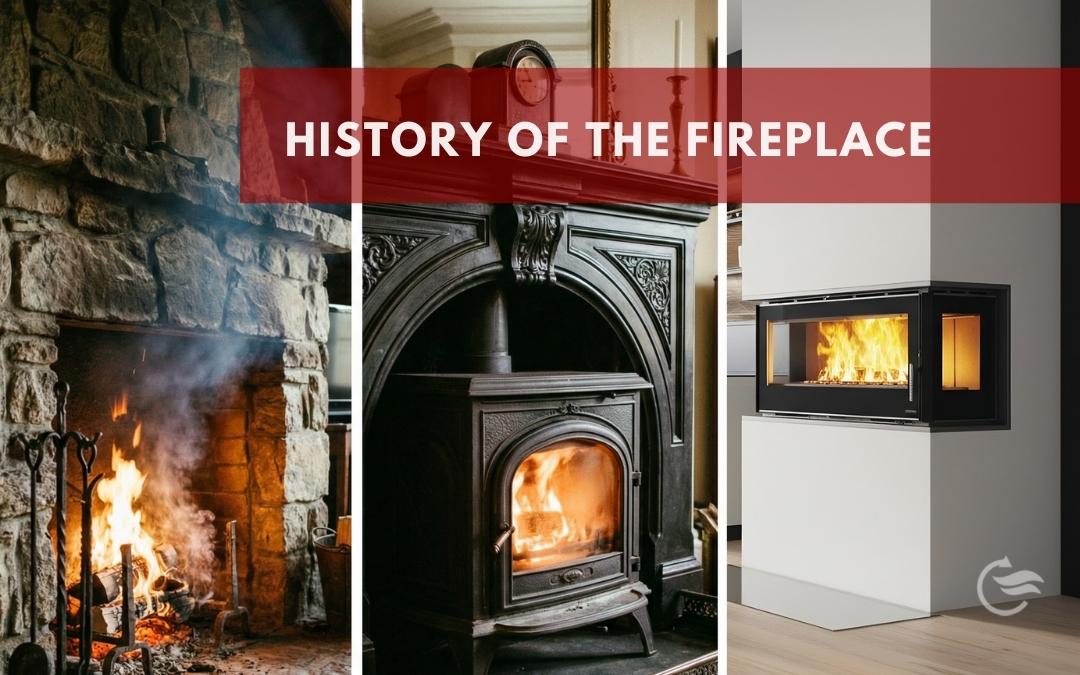
According to existing records, the invention of the fireplace dates back to the 1st century AD. Prior to that, there is no documentation or archaeological evidence that such a structure existed. However, even though the fireplace as an element had not yet appeared, fire was already used for heating as soon as it was discovered, and of course, for cooking as well.
History of the Fireplace
In the early stages of Western civilization, “fireplaces” were simply holes in the ground used to build fires for warmth. Later on, primitive heating systems emerged using ovens that distributed heat throughout living spaces—and even heated water.
As multi-story buildings began to appear, chimneys were built along the walls, allowing smoke to escape horizontally, which contrasts with how chimneys are constructed today.
Around the 17th century, a grate system was developed that allowed the fire to “breathe” better, helping the heat last longer.
In the 18th century, Benjamin Franklin invented the cast iron stove that bears his name. Even after the flames were out, it retained heat for hours. Installed at the center of the home, it distributed warmth throughout the space while also solving the problem of smoke indoors. However, its intense heat output also increased the risk of fire.
The 19th century saw the development of safer fireplaces with improved smoke evacuation systems.
But the evolution of the fireplace didn’t stop there. Today’s fireplaces are closed combustion systems that isolate the fire, enhancing safety and allowing homeowners to choose from a wide variety of cassette fireplaces, wood-burning stoves, and other high-performance models.
The Modern Evolution of the Fireplace
In recent years, fireplaces have evolved into increasingly efficient and environmentally friendly systems. Innovations such as self-cleaning interiors, advanced combustion chambers, and high thermal inertia designs have significantly improved energy performance while reducing emissions.
Moreover, new European regulations and certifications now require appliances to meet stricter standards in both safety and efficiency, aligning with a more sustainable and responsible way of heating our homes.
RELATED ARTICLES
Double-sided fireplaces: choose a 2-in-1 solution

Prepare your home for spring with our wood-burning stoves and fireplaces

Carbel to Showcase Its Latest Products at Progetto Fuoco 2026

The advantages of wood-burning stoves compared to other heating systems

5 Christmas plans to enjoy by your Carbel fireplace